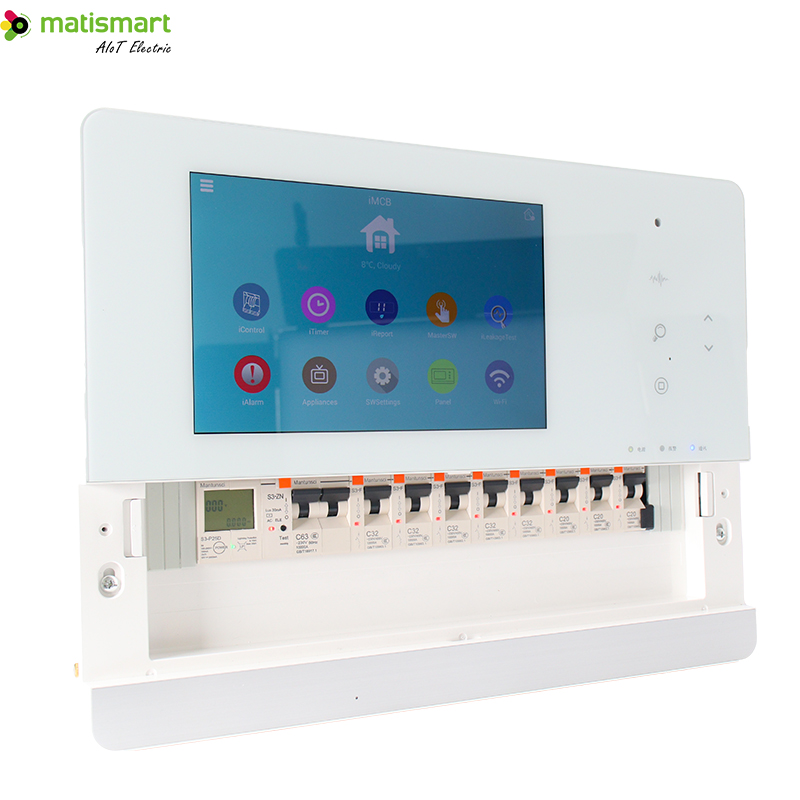



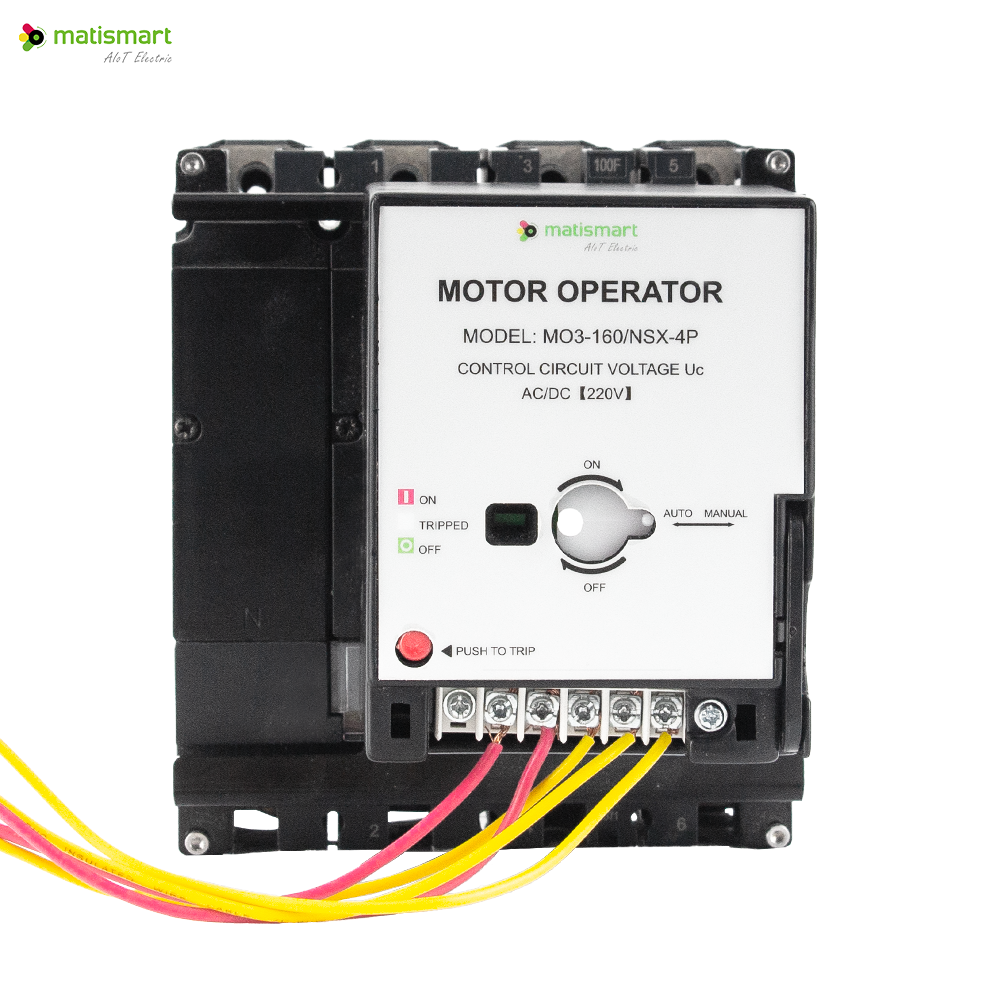
In our increasingly automated world, electrical infrastructure must be more than just a safety net; it must be intelligent and responsive. A Motorized Circuit Breaker (MCB/MCCB with Motor Operator) is a device that utilizes an integrated motor mechanism to physically open or close its contacts. While traditional breakers require a person to manually flip a switch, motorized versions enable remote, automated, and high-speed operation, making them indispensable for modern industrial and commercial power systems.
The Evolution of Circuit Protection
The fundamental difference between a motorized breaker and a standard one is the Electrical Operating Mechanism. Traditional breakers protect against overcurrent and short circuits, but they stay in the "tripped" or "off" position until someone manually resets them.
A motorized breaker adds a layer of command. It can be toggled via a signal from a remote control center, a programmable logic controller (PLC), or a smart energy management app. This allows for seamless "Power Switching" and "Remote Resetting" in large-scale electrical grids.
Key Benefits of Motorized Circuit Breakers
- Enhanced Personnel Safety: High-voltage equipment can pose a risk of arc flashes during manual operation. Motorized breakers allow technicians to operate switches from a safe distance or a separate control room, significantly reducing the risk of injury.
- Rapid Response and Efficiency: In the event of a fault, every second counts. Motorized breakers can be integrated into automated systems that instantly reroute power or isolate sections of a grid, preventing cascading failures and protecting expensive machinery.
- Seamless Automation and Integration: These breakers act as the physical "muscles" of a smart building or smart grid. They can be integrated with Building Management Systems (BMS) to automate load shedding or prioritize critical power paths during peak demand.
- Unmatched Reliability in Harsh Environments: Designed to withstand extreme temperatures, humidity, and dust, motorized breakers are often housed in reinforced molded casings. Their mechanical parts are engineered for thousands of cycles, ensuring long-term durability in industrial settings.
- Optimized Maintenance Schedules: Many motorized breakers provide digital feedback on their mechanical health. By tracking the number of operations and the timing of the motor, operators can perform maintenance before a failure occurs, reducing unplanned downtime.
Diverse Industry Applications
Motorized breakers are essential in environments where "uptime" is non-negotiable:
- Industrial Manufacturing: Protecting heavy machinery from surges while allowing operators to reset power to remote production lines without leaving the control station.
- Data Centers: Ensuring a constant, redundant flow of power. If one power source fails, motorized breakers can automatically switch the entire rack to a backup generator or UPS.
- Renewable Energy (Solar and Wind): Solar farms and wind turbines are often spread across vast, remote areas. Motorized breakers allow utility operators to manage these isolated circuits from a central office, responding to grid fluctuations in real-time.
Matismart Remote Control Motorized Solutions
The Matismart Motorized Circuit Breaker series is designed to bring full transparency and control to your power grid. Our hardware does more than just switch power; it serves as a sophisticated monitoring node.
Key features of the Matismart series include:
- Two-Way Communication: Confirm the breaker's status (Open/Closed/Tripped) remotely.
- Real-Time Parameter Tracking: Monitor voltage, current, and residual current in real-time.
- Safety Lockout: Features a remote locking function to prevent accidental reclosing during maintenance.
- Energy Analytics: By analyzing the data collected via our integrated software, users can identify inefficiencies and significantly reduce operational energy costs.
Conclusion
Motorized circuit breakers are a cornerstone of modern electrical engineering. By bridging the gap between mechanical protection and digital control, they provide a safer, more efficient, and more reliable way to manage power. As industries continue to automate, the motorized breaker will remain a vital component in the quest for a smarter, more resilient energy future.