


An Arc Fault Detection Device (AFDD)—also widely known as an Arc Fault Circuit Interrupter (AFCI)—is a specialized safety device designed to identify and interrupt hazardous electrical arcs. Since arc faults are a leading cause of electrical fires in both residential and commercial buildings, AFDDs are essential for mitigating risks caused by aging wiring, damaged insulation, or faulty appliances.
The Critical Role of AFDDs
The primary value of an AFDD is its ability to "see" a fire before it starts. In residential settings, where numerous appliances are constantly plugged in, the risk of a series or parallel arc is high. While standard circuit breakers protect against overloads, they cannot detect the specific electrical signature of a sparking wire. AFDDs fill this safety gap, cutting power before the heat from an arc can ignite surrounding materials.
How AFDDs Work: Detection Technology
AFDDs use advanced digital microprocessors to monitor the current waveform in real-time. They are programmed to distinguish between "working arcs" (the normal spark created when a motor starts or a switch is flipped) and "malfunctioning arcs" (dangerous, persistent sparking).
There are two primary configurations:
- Branch/Feeder AFDDs: Typically installed at the panel to protect the entire length of the branch circuit.
- Combination AFDDs: These provide the most comprehensive protection, detecting both series arcs (caused by a single broken wire) and parallel arcs (short circuits between two different wires).
Key Features and Benefits
- Superior Fire Prevention: By detecting low-level arcs that standard breakers ignore, AFDDs drastically reduce the risk of property damage and injury.
- Regulatory Compliance: Installation is increasingly mandatory under international standards and the National Electrical Code (NEC) for bedrooms, kitchens, and laundry areas.
- Versatile Installation: AFDDs are designed for flexibility. They can be installed as part of a new electrical panel or retrofitted into existing systems with minimal disruption.
- Intelligent Compatibility: Modern AFDDs are engineered to be "smart," minimizing "nuisance tripping" caused by electronic devices like vacuum cleaners or dimmers.
Installation and Maintenance
For maximum safety, AFDDs should be installed by a licensed electrician. The process involves integrating the device into the distribution board and connecting it to the designated circuits.
Once installed, AFDDs are largely "set and forget." However, the NFPA recommends testing the device every six months using the integrated "Test" button to ensure the electronic detection module is functioning correctly.
Matismart’s Advanced AFDD Solutions
Matismart offers industry-leading protection with our specialized MTAF series:
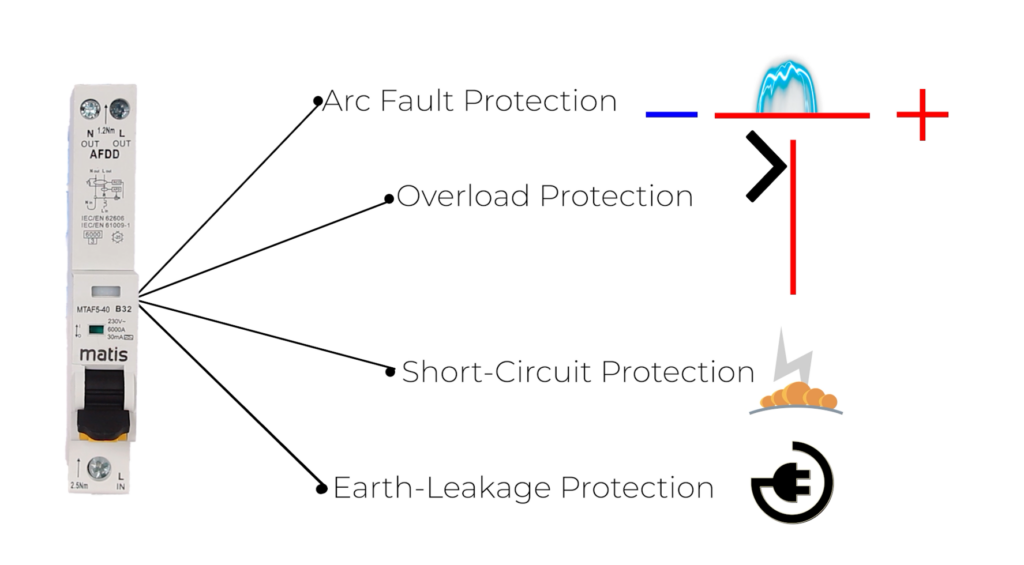
- MTAF5 Series (All-in-One): This is a high-integration device providing four layers of protection: Short Circuit, Overload, Arc Fault, and Earth-Leakage (RCD) protection. It is the ultimate solution for space-saving and comprehensive safety.
- MTAF1-32 Series: A robust unit combining a miniature circuit breaker (MCB) with a dedicated arc detection module and trip mechanism. It utilizes an intelligent chip to analyze waveforms and isolate faulty arcs with high precision.
Conclusion
Arc Fault Detection Devices are no longer just an "option"—they are a cornerstone of modern electrical safety. By identifying the unique signature of a fault arc, devices like the Matismart MTAF series prevent disasters before they happen, ensuring your property remains safe and compliant with the latest global standards.