


In today’s world, we rely more than ever on electronic devices. To keep our homes running smoothly, our electrical systems must be both efficient and safe. A key component in modern electrical safety is the Arc Fault Circuit Interrupter (AFCI). In this guide, we will explore how AFCIs work, why they are vital for fire prevention, and how to maintain them.
What is an Arc Fault?
An arc fault is an unintended electrical discharge caused by current flowing through an unplanned path. This creates a high-temperature "arc" of electricity. These faults usually occur because of:
- Damaged or frayed wiring.
- Loose electrical connections.
- Moisture or corrosion within the system.
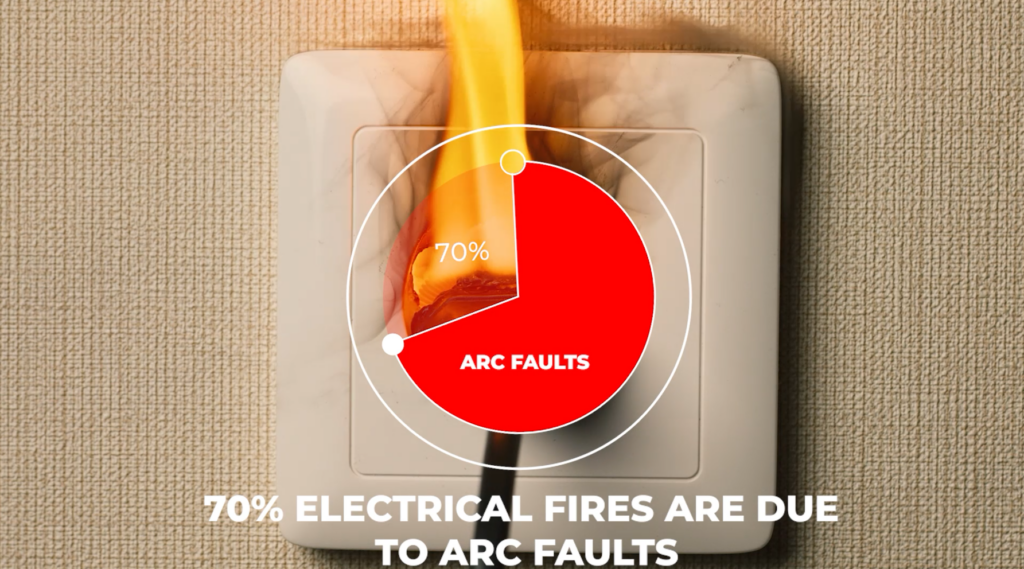
When electricity "jumps" between two conductors or from a conductor to the ground, it creates intense heat and sparks. These sparks can easily ignite nearby materials like wood, insulation, or fabric, leading to a house fire.
Unlike standard circuit breakers—which only trip during an overload (too much power used) or a short circuit—AFCIs are designed to detect low-level, persistent sparking that standard breakers often miss.
How Do Arc Fault Circuit Interrupters Work?
AFCIs are sophisticated safety devices that constantly monitor the electrical current flowing through a circuit. They use advanced electronics to distinguish between a "normal" arc (like the small spark you see when you flip a light switch) and a "dangerous" arc (the kind that causes fires).
When the AFCI detects an abnormal current waveform, it instantly opens the circuit, cutting off the power before a fire can start. Modern AFCIs use various technologies to achieve this, such as:
- Current Transformers (CTs): Measuring the flow through conductors to find discrepancies.
- Signature Analysis: Using microchips to identify the specific electrical "signature" of a dangerous arc.
Two Main Types of AFCIs
- Branch/Feeder AFCIs: Installed directly in the electrical panel, these protect the entire circuit "branch," including all the wiring and connected devices from the panel onward.
- Combination AFCIs (CAFCI): These provide the highest level of safety. They protect against both high-energy "parallel" arcs (between two wires) and low-energy "series" arcs (broken or frayed wires), covering the circuit all the way to the individual outlets.
Benefits of Installing AFCIs
- Superior Fire Prevention: They address the leading cause of home electrical fires by stopping arcs before they ignite surrounding materials.
- Enhanced Personal Safety: By interrupting faulty currents immediately, they reduce the risk of electrical shocks.
- Code Compliance: Many modern building codes (such as the NEC) now mandate AFCI protection for bedrooms, living rooms, and other residential areas.
- Reliability: Modern AFCIs reduce "nuisance tripping" while maintaining high sensitivity to real threats.
Note on Energy Savings: While AFCIs are primarily safety devices, by maintaining "cleaner" electrical paths and preventing heat loss through arcing, they contribute to the overall health and efficiency of your electrical system.
Matismart Arc Fault Solutions
The Matismart MTAF series offers comprehensive protection for your home. For example, the MTAF5 AFDD (Arc Fault Detection Device) is an all-in-one solution that combines:
- Short circuit and Overload protection (MCB functionality).
- Residual current/leakage protection (RCD/RCCB functionality).
- Arc fault protection.
Our MTAF1-32 series utilizes an intelligent chip-based detection program to analyze waveforms in real-time, ensuring that power is disconnected only when a genuine, hazardous arc is confirmed.