


Residual Current Devices (RCDs) are a vital part of electrical safety in any building. The two most common types are the RCCB (Residual Current Circuit Breaker) and the RCBO (Residual Current Breaker with Overcurrent Protection). While they both protect people from electric shocks, they handle circuit faults differently.
What is an RCCB and how does it work?
A Residual Current Circuit Breaker (RCCB) is designed specifically to detect "leaking" electricity. Its main job is to protect people from electric shock.
It works by constantly comparing the current flowing through the "live" wire and the "neutral" wire. In a healthy circuit, these two should be equal. If they are not, it means electricity is leaking somewhere—perhaps through a person or a faulty appliance. When this imbalance is detected, the RCCB trips and cuts the power instantly. Note: An RCCB alone does not protect against overloads or short circuits; it must be paired with an MCB (Miniature Circuit Breaker).
What is an RCBO and how does it work?
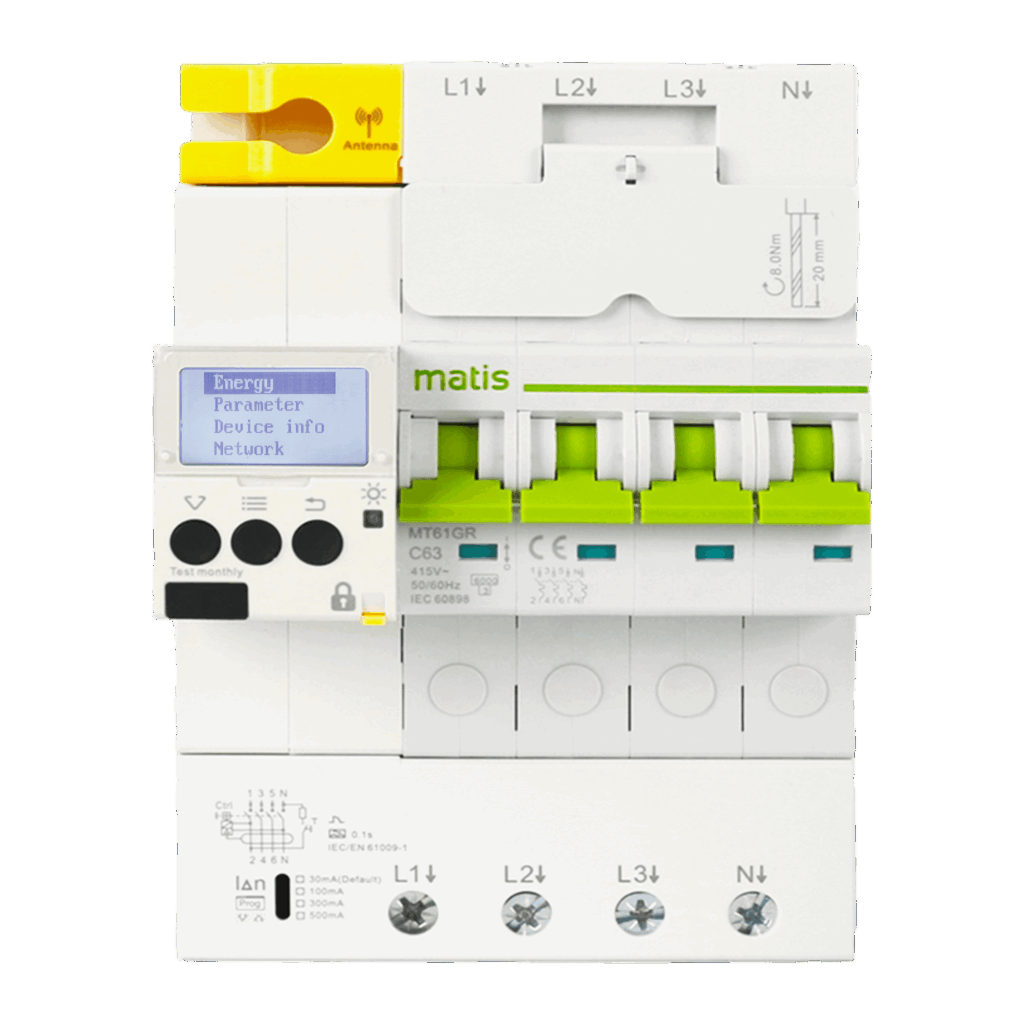
An RCBO is a 2-in-1 device. It combines the functions of an RCCB (leakage protection) and an MCB (overcurrent protection) into a single unit. It is designed to protect both people from shocks and the electrical system from fire or damage caused by overloads.
Because an RCBO handles everything, it is usually used to protect a single, specific circuit (like a kitchen or a bathroom). If a fault occurs in that room, only that room loses power, while the rest of the building stays on.
Key Differences Between RCCBs and RCBOs
Type of Protection
The most significant difference is the level of protection. An RCBO provides dual protection—it stops leakage current AND handles overloads or short circuits. An RCCB only protects against leakage. If you use an RCCB, you must install a separate MCB to protect your wires from melting due to too much power.
Cost and Value
An RCBO is generally more expensive than a single RCCB because it contains more technology. However, if you are building a new system, an RCBO might save you money on labor and extra parts, as you only need to install one device instead of two (an RCCB plus an MCB).
Installation Space
This can be confusing, but in a modern electrical panel, an RCBO actually saves space. While the individual RCBO unit might be slightly larger than a basic switch, it replaces two separate devices. Using RCBOs allows for a smaller, cleaner distribution board.
Troubleshooting and Tripping
When an RCCB trips, it could be caused by any of the several circuits connected to it, which makes finding the problem difficult. When an RCBO trips, you know exactly which circuit has the problem. Furthermore, since an RCBO is matched to its specific circuit, it often reacts more accurately to faults than a generic RCCB setup.
Wiring Effort Using
RCBOs makes wiring much simpler. Because one device does all the work, there are fewer wires to connect between different breakers. This reduces the risk of loose connections and results in a much neater installation in the breaker box.
Conclusion
Both RCCBs and RCBOs are essential for preventing electrocution and fires. An RCCB is a cost-effective choice for general protection when paired with standard breakers. An RCBO is a more advanced, "all-in-one" solution that offers better protection and easier troubleshooting for modern homes and offices. Your choice depends on your budget and how much specialized protection your building needs.